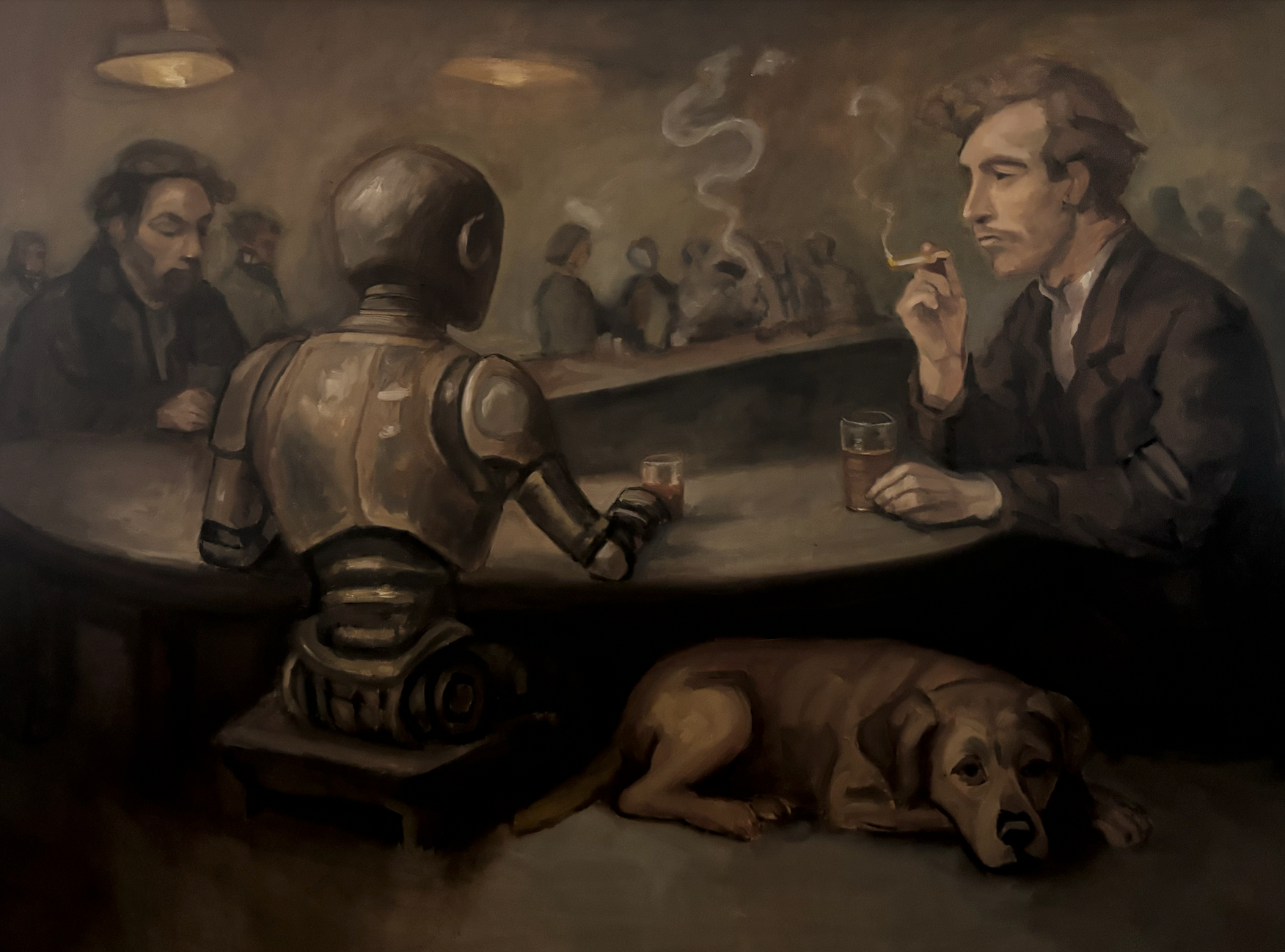
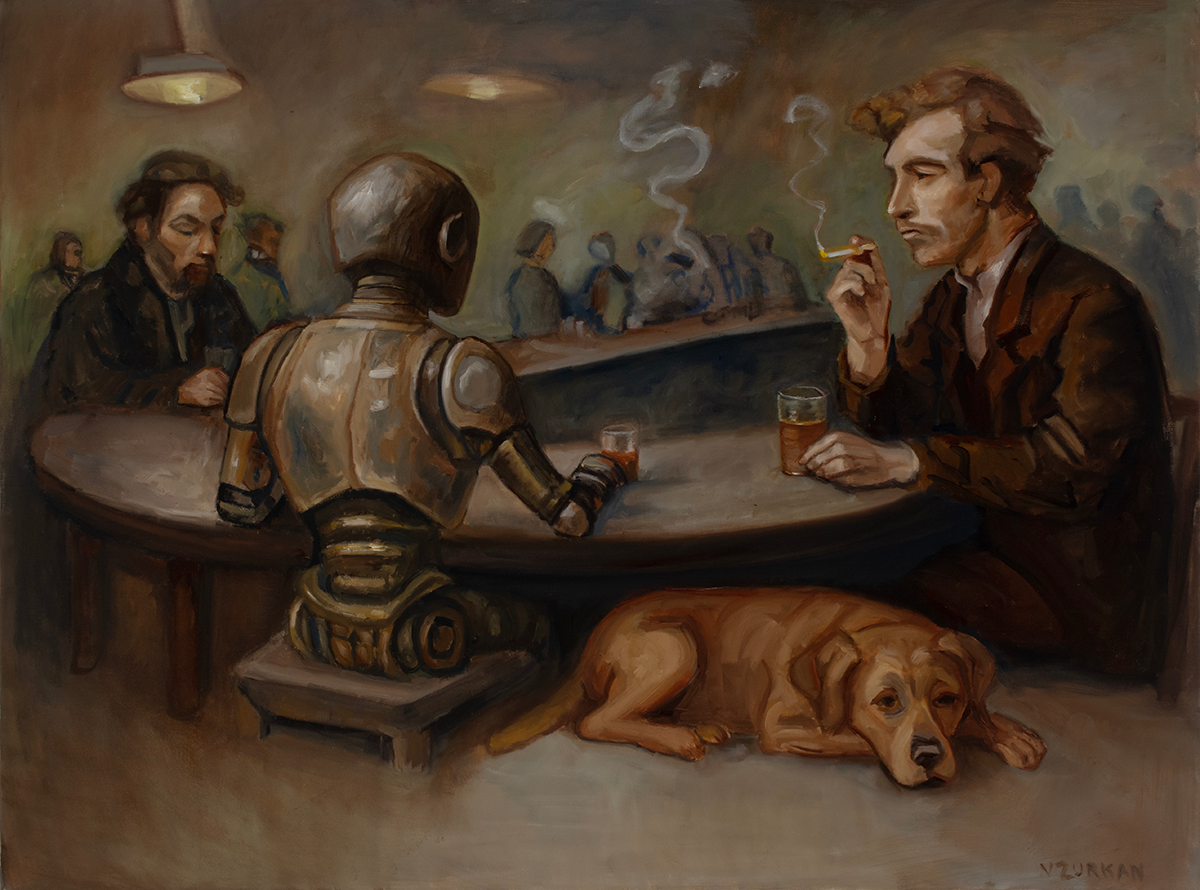
After Work Happy Hour at the Bar
3 X 4 feet, oil on canvas
Featured Works
Heavy Metal: The Imitation of Life began with a simple image: a shiny animal standing in the snow. The strong contrast between soft white snow and hard metal stayed with me and grew into questions about artificial intelligence, what it looks like and how it sits between nature and human-made objects. The chrome animals in these quiet landscapes are no longer truly alive, but stand in for ideas of what is real and what is fake.
As the series continues, the work shifts toward a nineteenth-century Romantic style, creating a pull between feeling and machine, past and future. Together, the paintings reflect both curiosity and unease about what technology may change or erase, while still leaving room for beauty, humor, and curiosity.
3 X 4 feet, oil on canvas
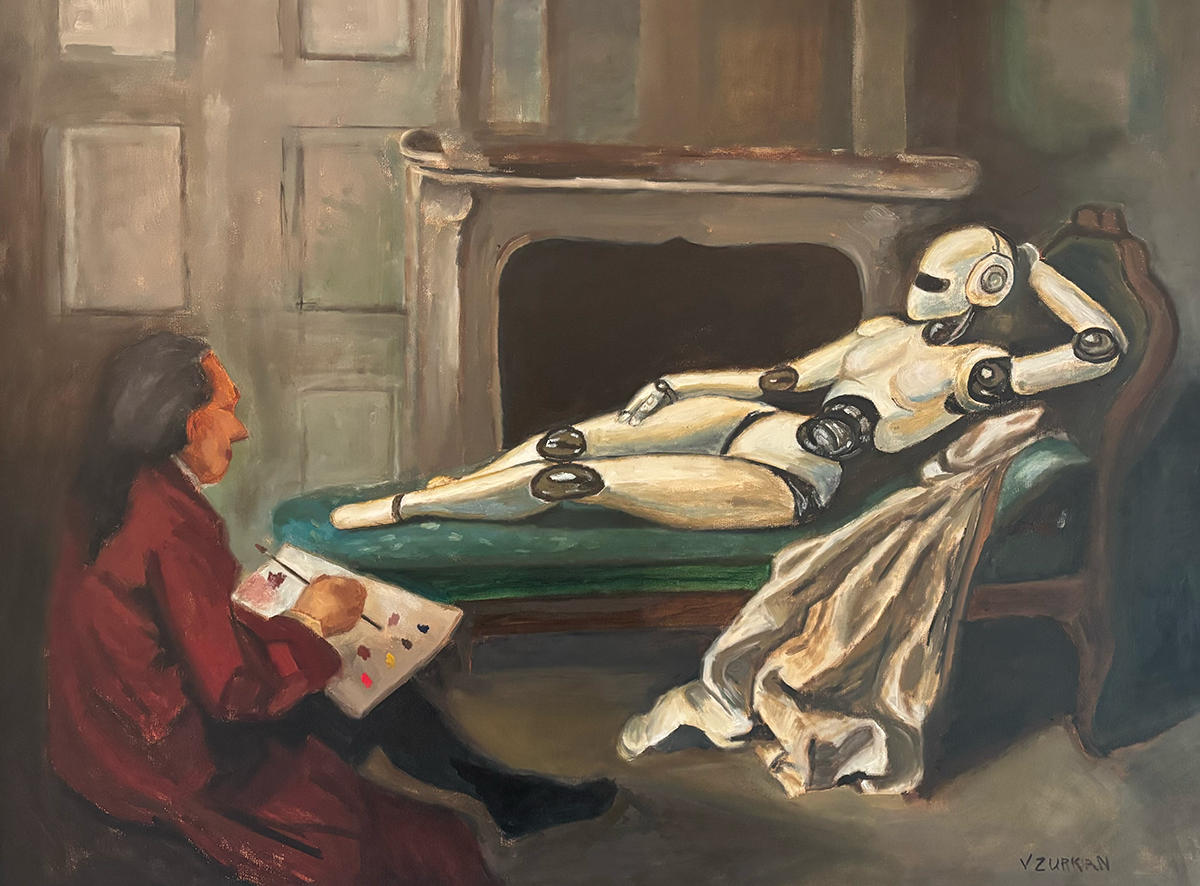
3 X 4 feet, oil on canvas
More about the Series
One winter day, gazing out at snowy fields, I imagined a shiny animal standing among the snow. The contrast struck me immediately—cold, soft whiteness against something hard, reflective, and metallic. That image stayed with me and became the starting point for this series.
We live in a moment saturated with speculation about artificial intelligence. We hear that it may take our jobs, reshape society, and eventually run much of the world. But what does AI actually look like? Is it synthetic or metallic? Is it a fabricated intelligence, or a cumulative reflection of humanity as it exists today? These questions became intertwined with that original image of a metal animal in a natural landscape—nature versus human-made artifice.
Heavy Metal: The Imitation of Life explores this boundary through surreal transformations of wildlife into sculptural, chrome forms. Set against quiet coastal landscapes, mirrored seagulls and ducks appear impossibly polished and radiant, yet frozen in time. No longer alive in a traditional sense, they become symbols of permanence, perfection, and alienation.
If imagined visually, AI might resemble these chrome birds: smooth, metallic, almost human, yet missing something essential. It can appear artificially wise and capable of extraordinary good, while remaining emotionally hollow. It holds the power to preserve life—and just as easily to erase it.
In the latter part of the series, the paintings shift into a nineteenth-century Romanticism style, counterintuitive to the sleek, futuristic aesthetic often associated with AI. This stylistic metamorphosis introduces tension between past and future, emotion and machine, intuition and control.
Ultimately, this work is a visual reflection on these ideas. I remember laughing so hard as a teenager that we would fall to the ground—laughter felt like a drug. I hope this series invites contemplation of the future while offering moments of humor and wonder along the way.
Read full artist statement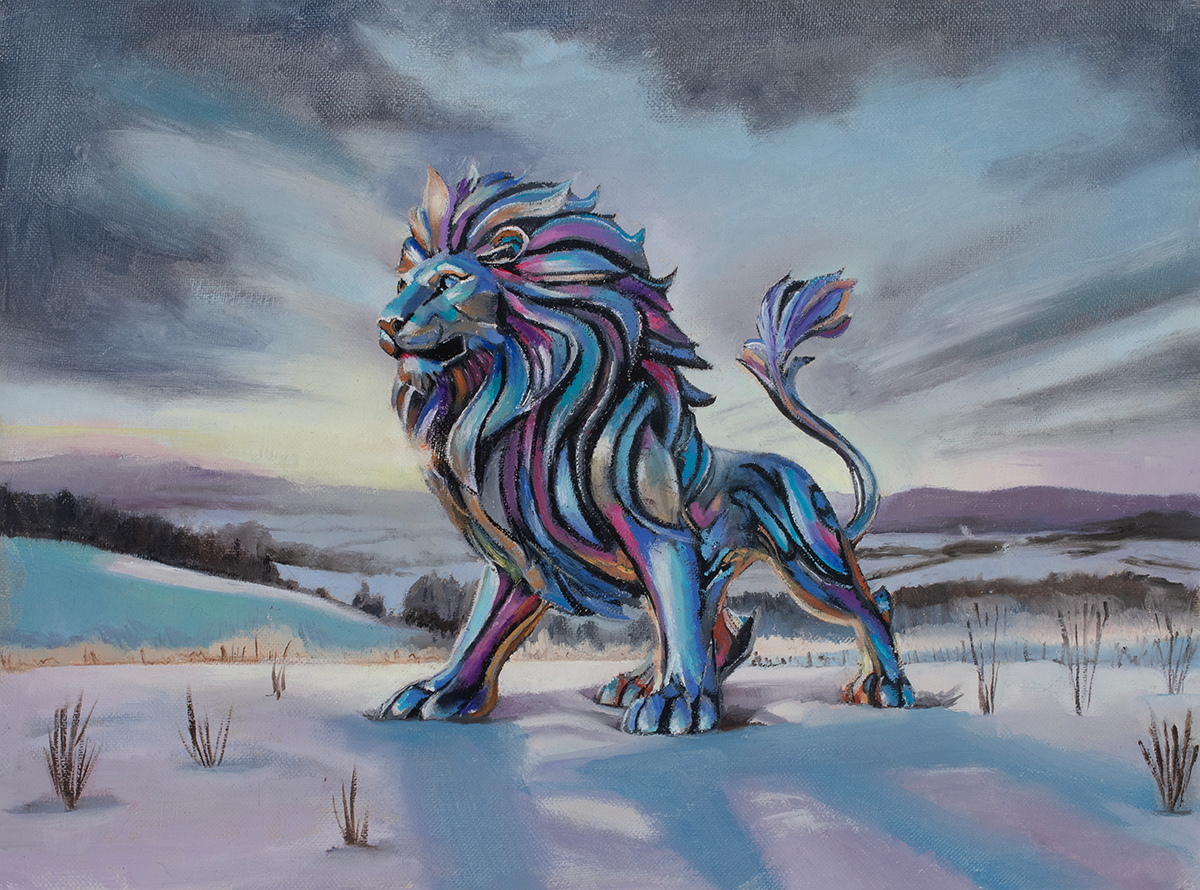
12 X 16 inches, oil on linen
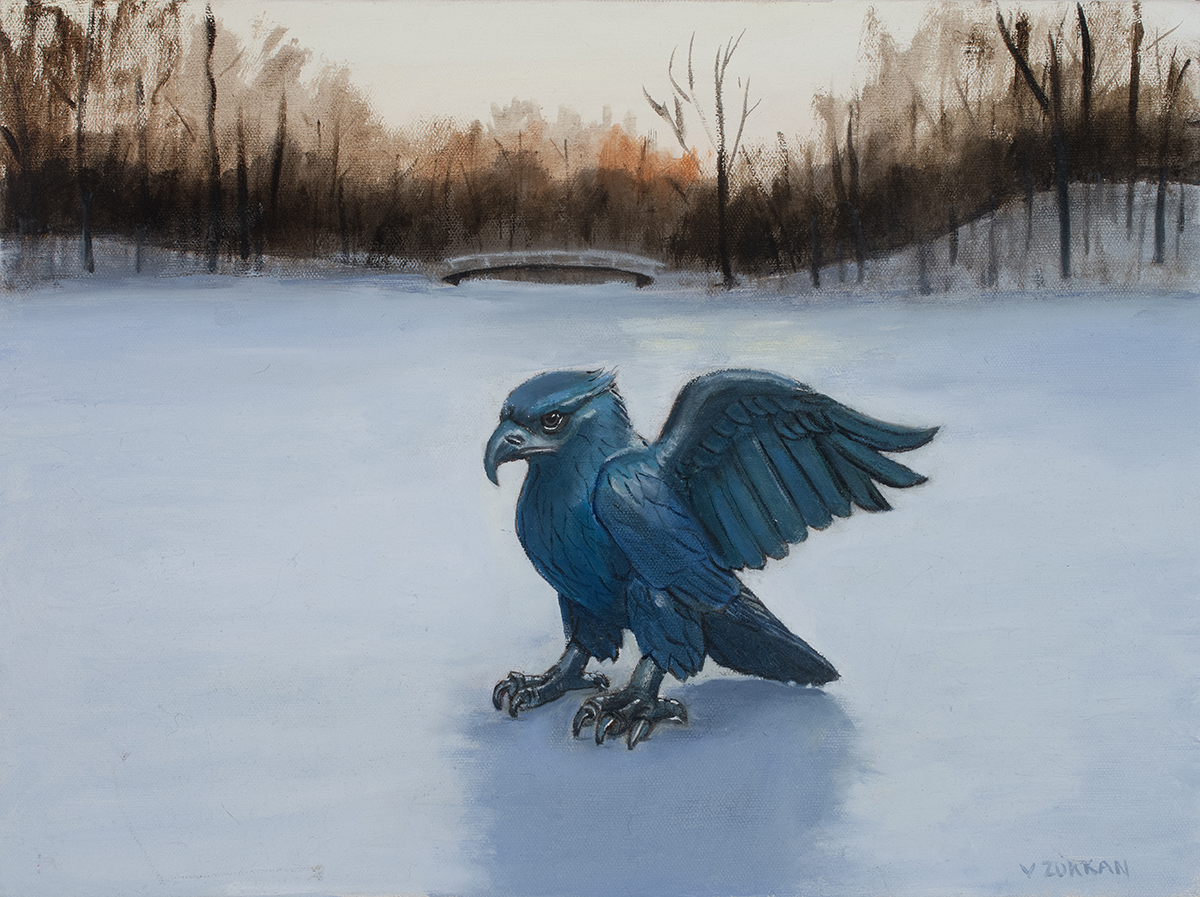
12 X 16 inches, oil on linen
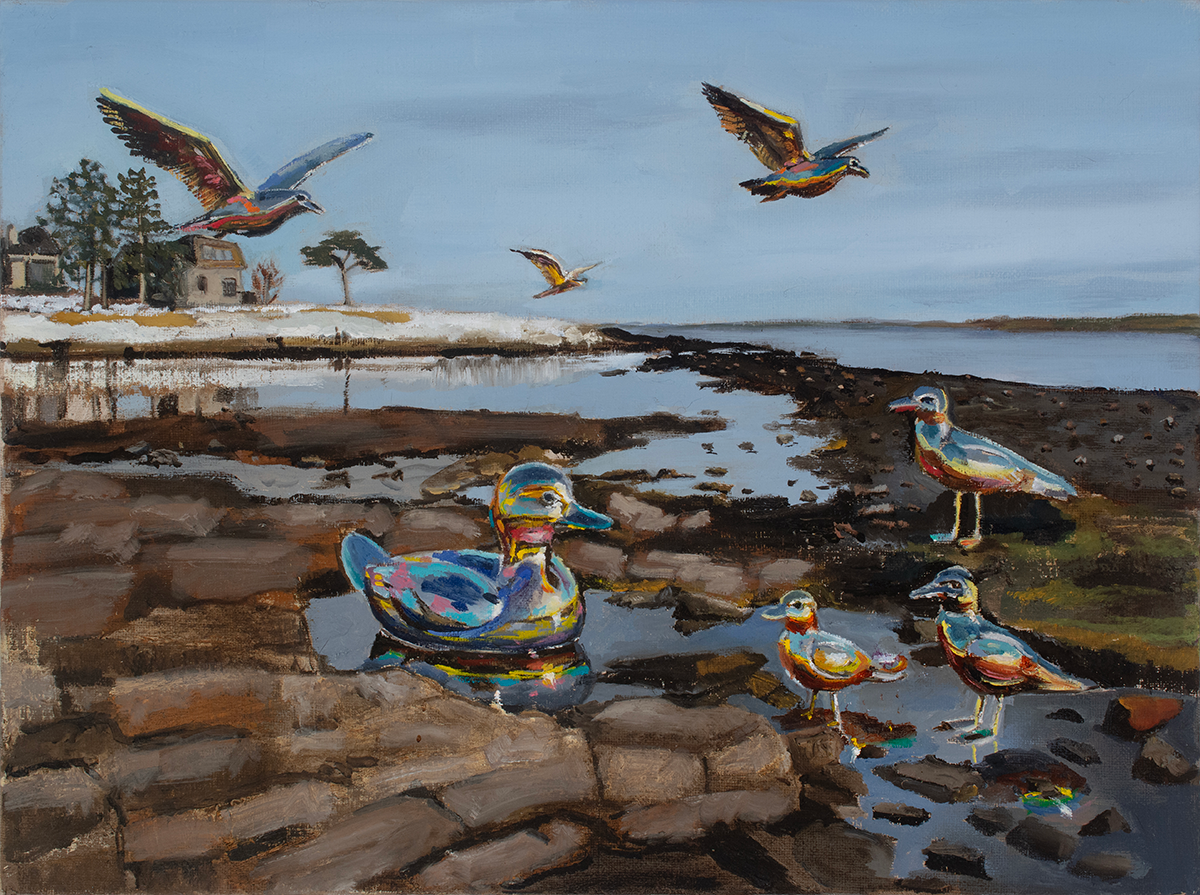
12 X 16 inches, oil on linen
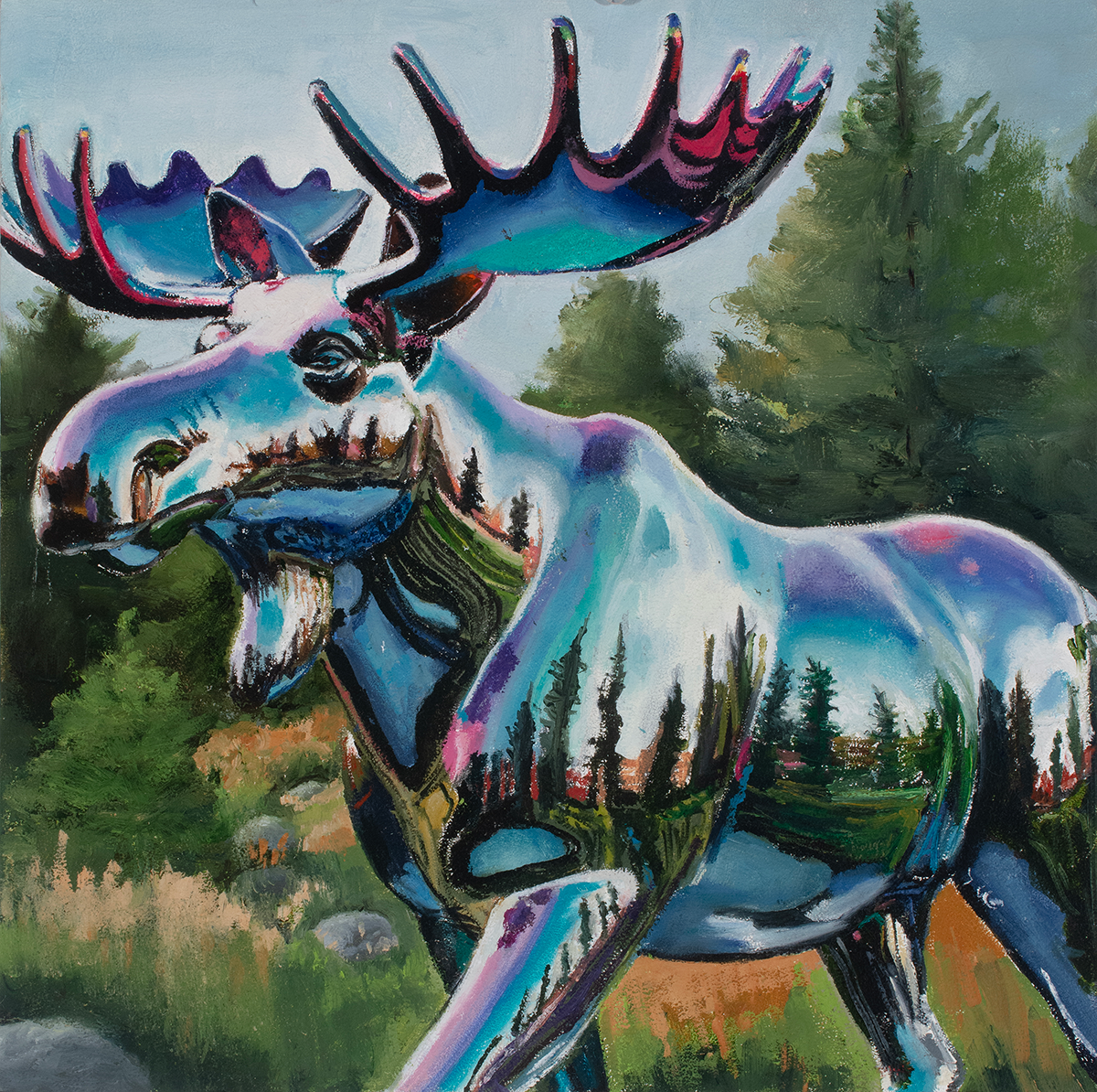
12 X 12 inches, oil on aluminum
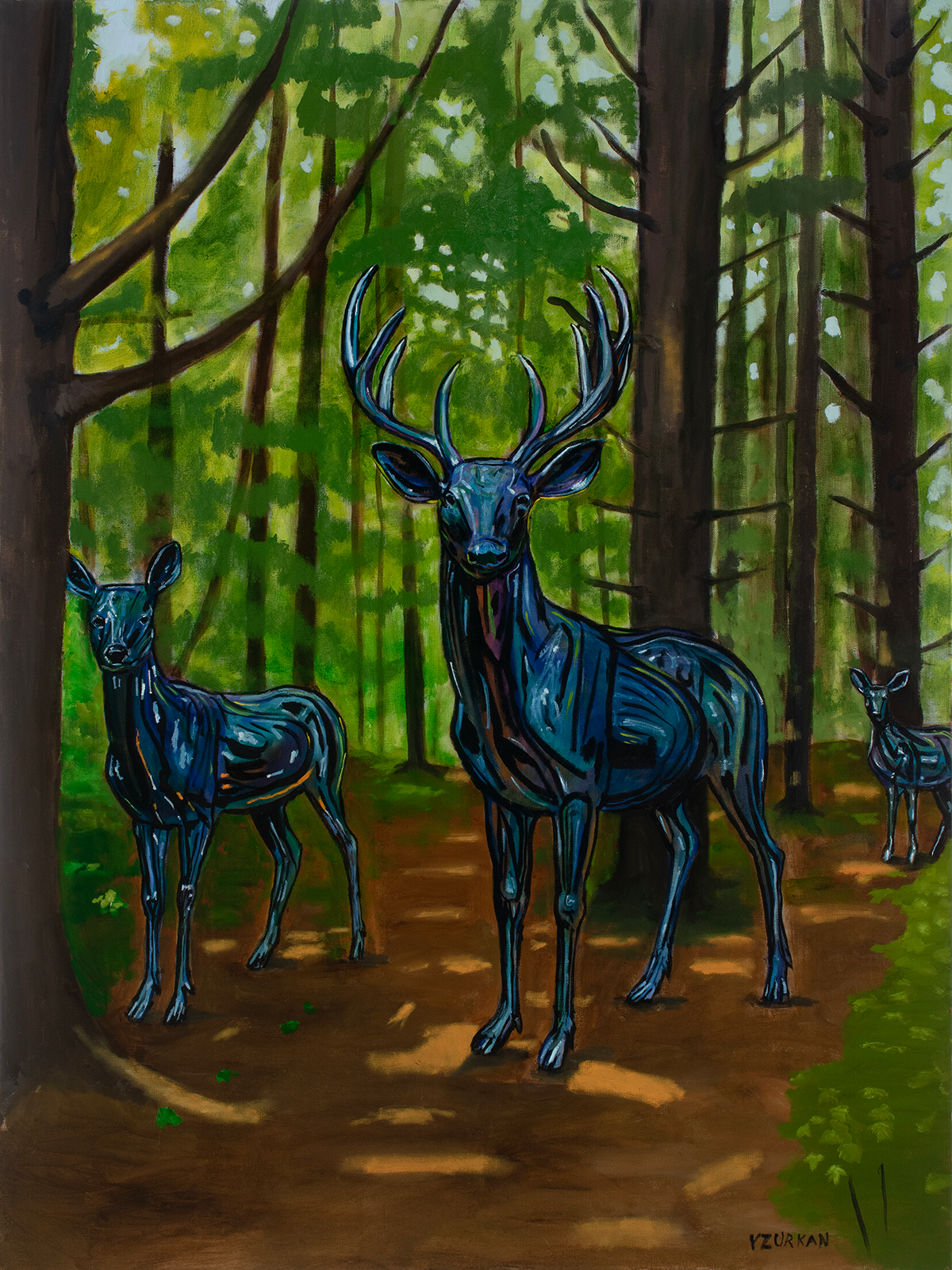
4 X 3 feet, oil on canvas
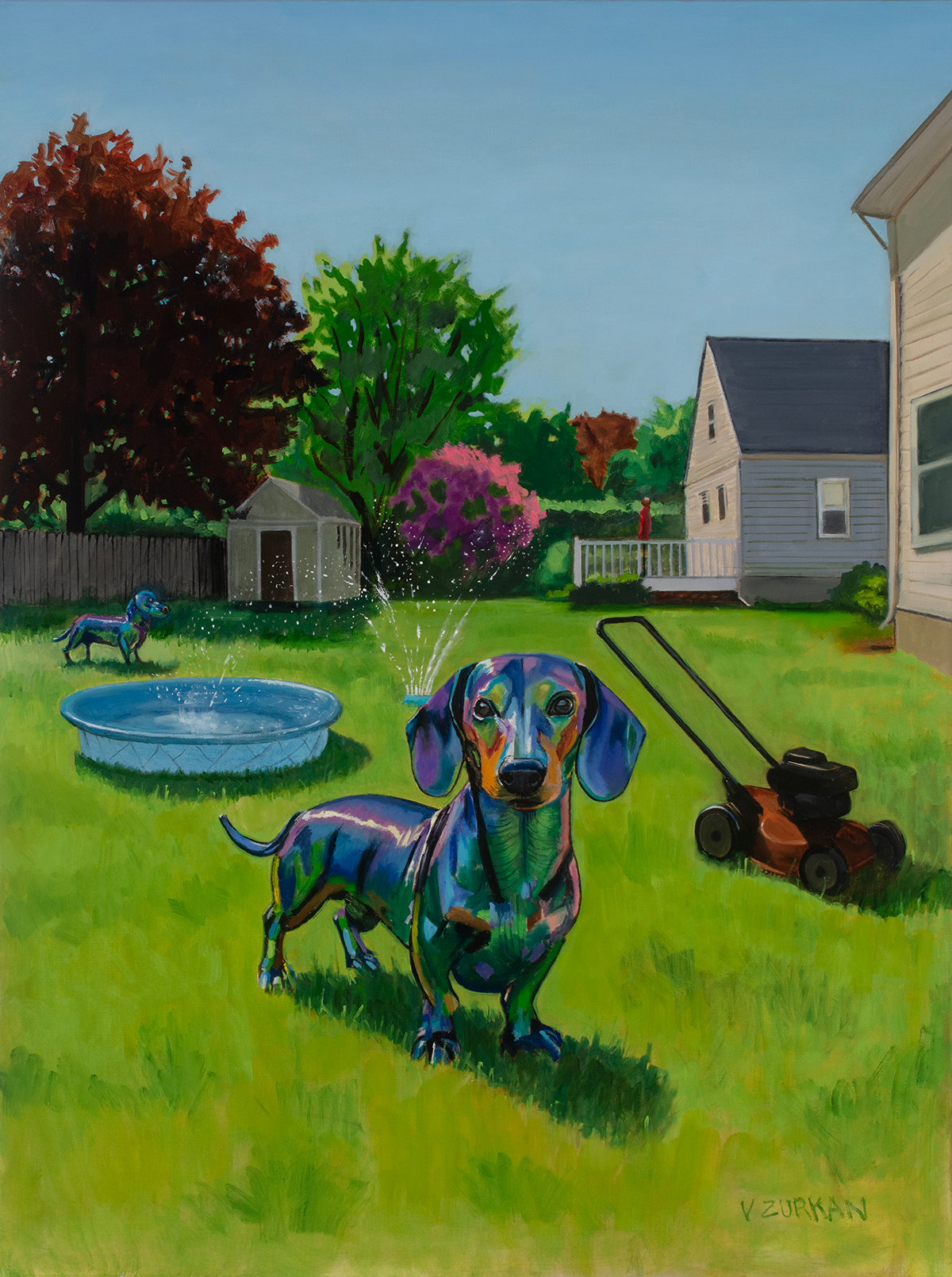
4 X 3 feet, oil on canvas
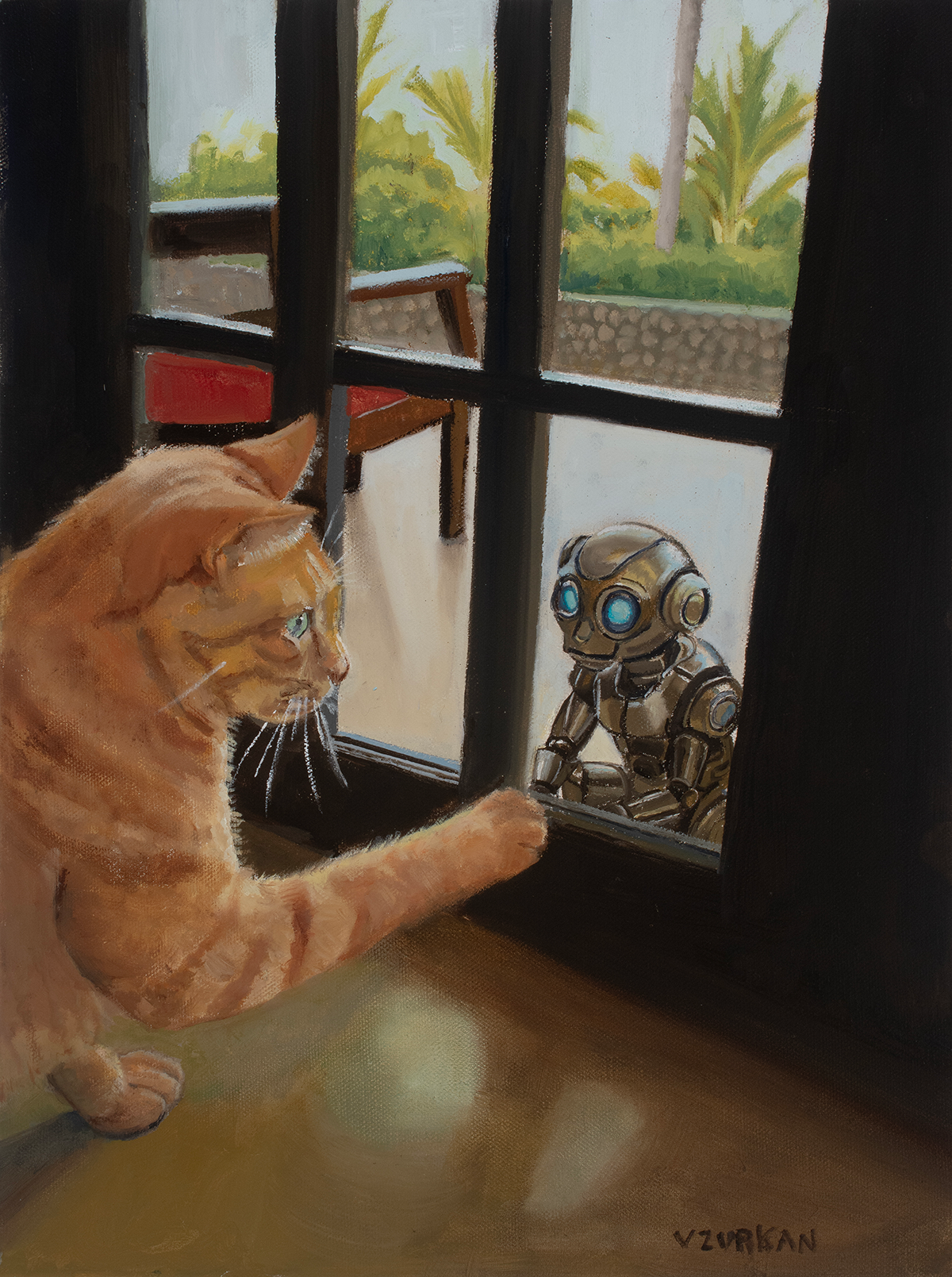
12 X 16 inches, oil on canvas
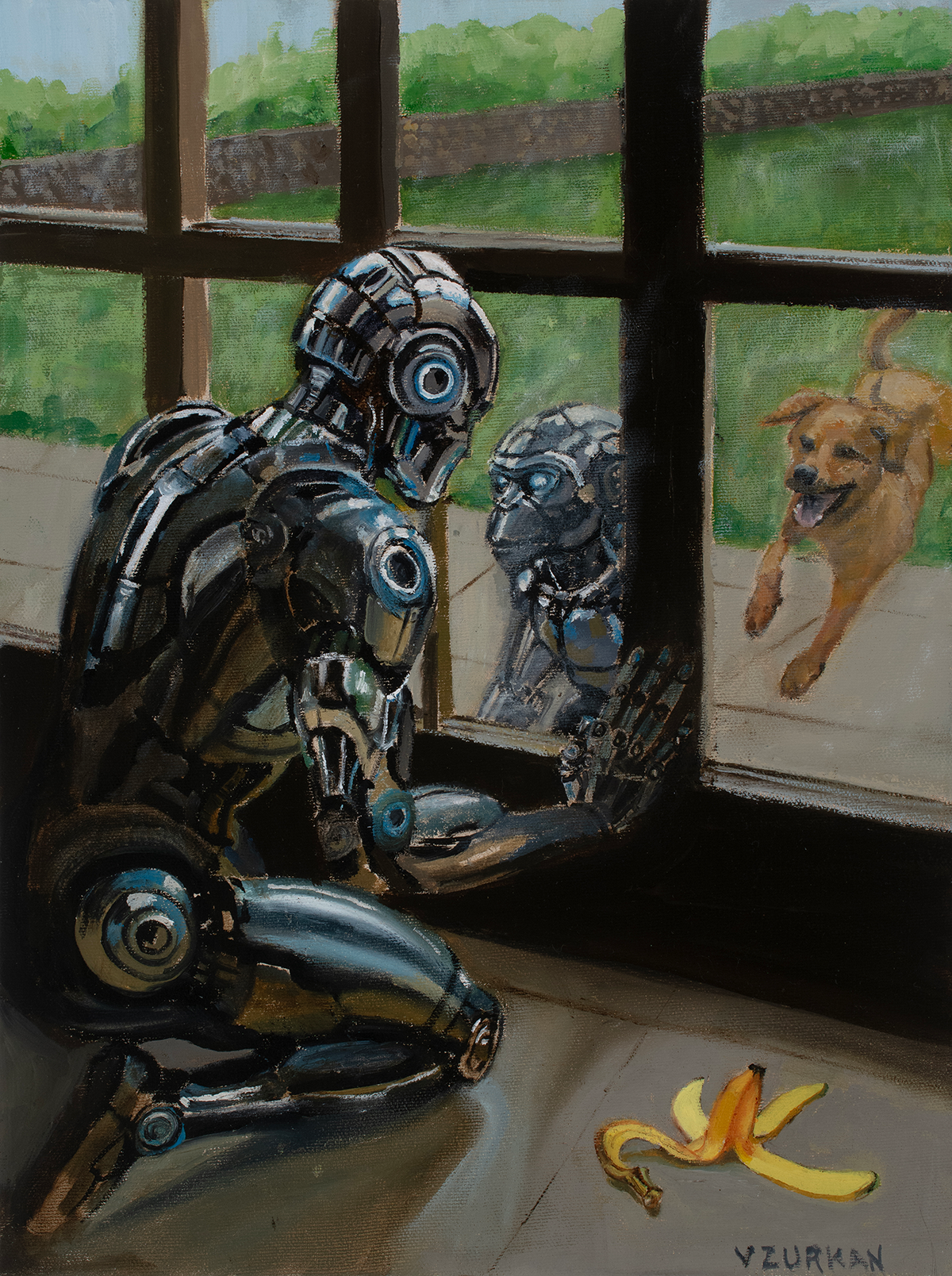
12 X 16 inches, oil on canvas
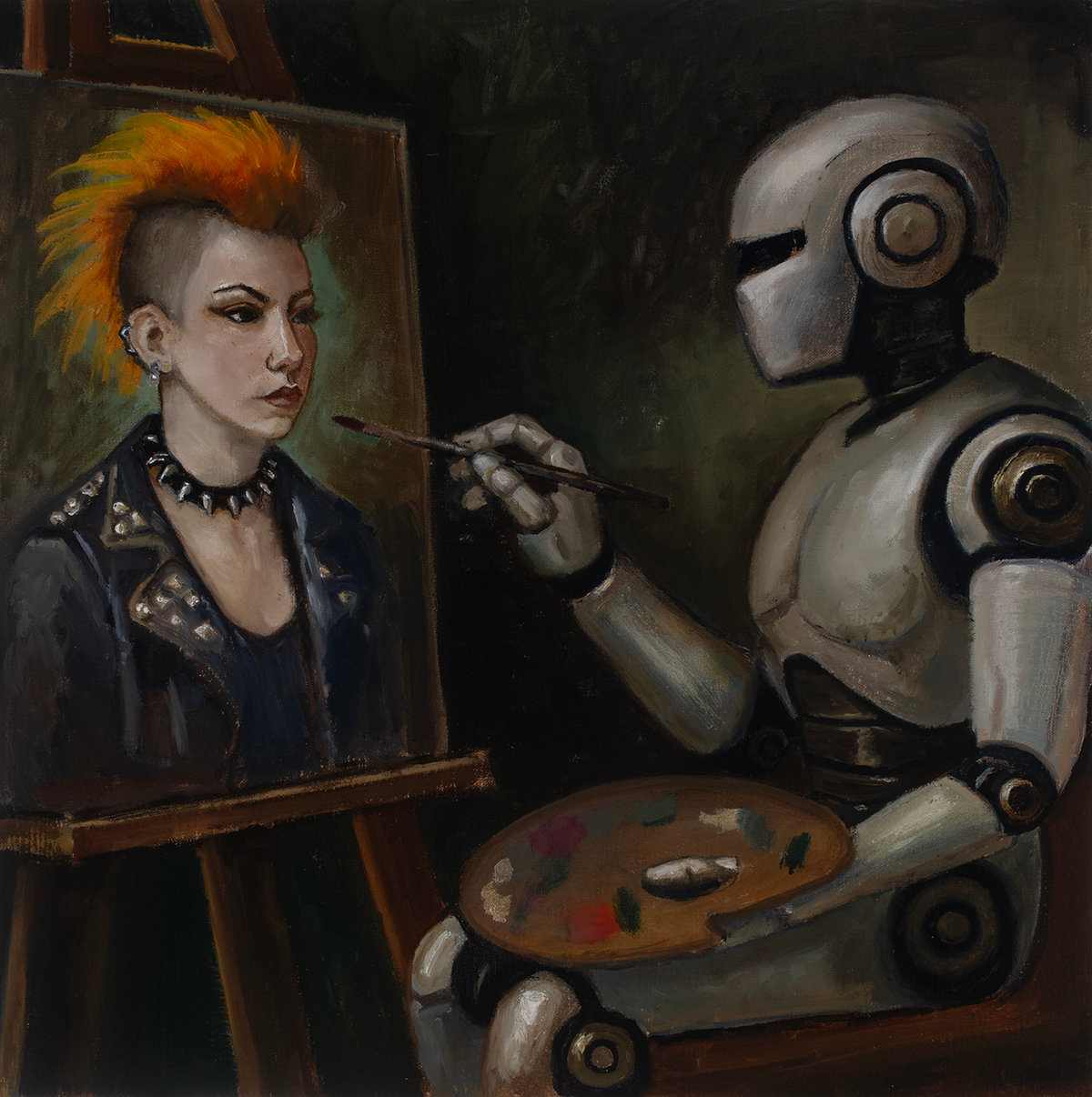
12 X 12 inches, oil on aluminum
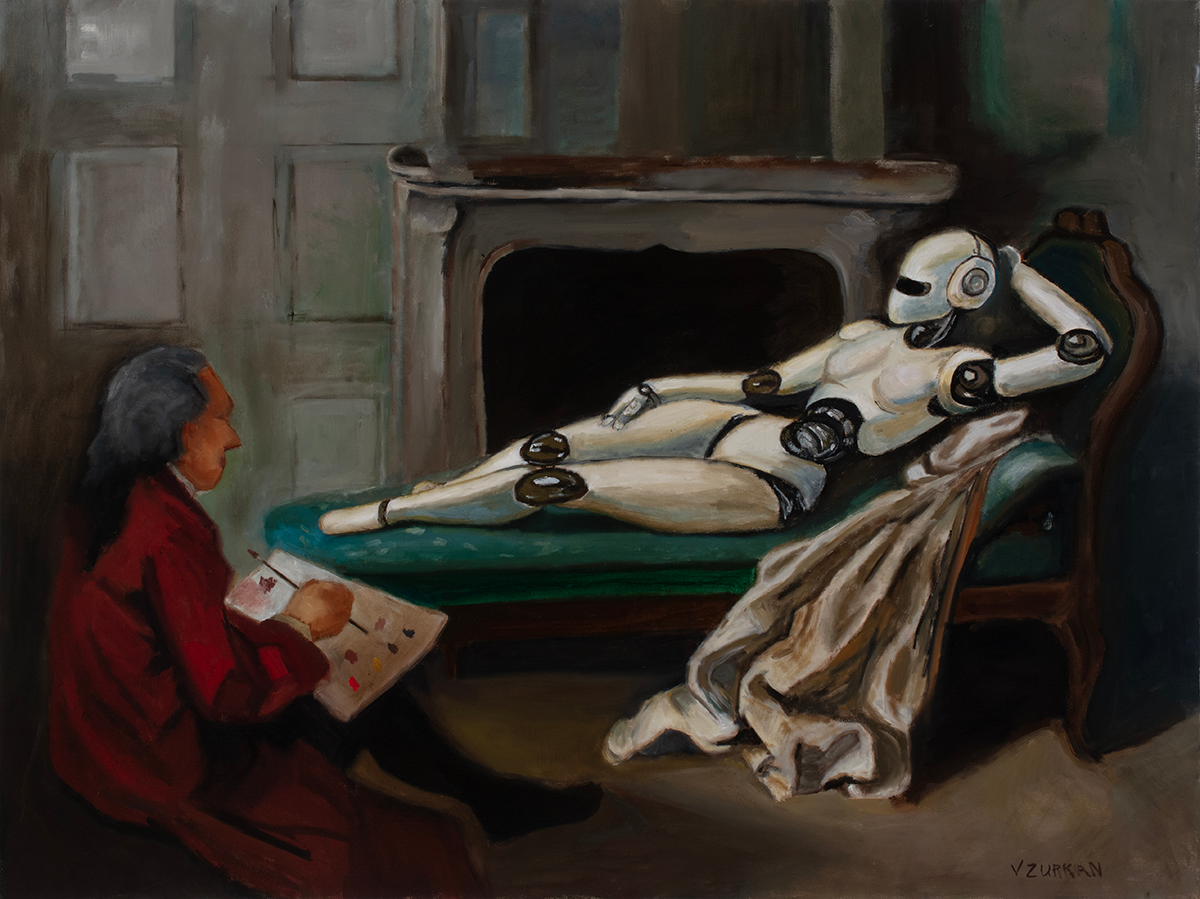
3 X 4 feet, oil on canvas
3 X 4 feet, oil on canvas
More about the Artist

I was born with a look of utter disbelief and that feeling has continued into my adulthood. Always drawn to the unusual, it is natural that I pursued an artistic life. I studied art in undergrad as well as post graduate work in psychology. I’ve also studied classical realism for years including painting and drawing with David Hardy, Noah Buchanan and several other amazing artists.
For me paintings capture a snapshot of history from a subjective experience. Art history walks us through each artist’s individual perspective of time, culture, politics, etc. Painting has been a way for me to funnel my energy both emotionally and analytically and tell my own subjective experience of the absurdity of existence, while also contributing to my life with both meaning and purpose.